Showing posts with label CD Review. Show all posts

Sunday, April 04, 2010

Jet City Blues CD Review

Up One Side...Down The Other by the Crossroads Band

Blues Town Records - Available at all Crossroads Band gigs, or CDs can be purchased from the band by contacting dennis@crossroadsblues.net.

This CD, released by Seattle's Crossroads Band in 2009, is easily one of the best regonal recordings I have heard recently.  The Crossroads Band features seasoned Seattle blues veterans Steve Bailey (harp, guitar, slide guitar, and vocals), Dan Newton (keyboards, guitar, lap steel guitar, and vocals), Dennis Ellis (tenor and baritone saxophones, and vocals), John "The Savage" Lee (bass and vocals), and David Hudson (drums and vocals).  Did I mention that everyone sings?  Pretty unusual for a local blues project, my friends.

There is lots of good stuff on this disk, including five cool originals mixed in with some carefully chosen covers.  One of the unique things that you will hear here are the horn arrangements, which are usually played on harp and sax, but sometimes created by Dennis overdubbing tenor and baritone saxes (Dennis also plays the flute on some tunes at Crossroad band gigs). The tunes range from Roy Brown-style jump tunes ("Fannie Brown Got Married"), Chicago blues ("The Sun Is Shining," Stop Now"), New Orleans funk ("Something You Got," "Walk Your Blues Away"), to West Coast boogaloo ("Get Back").  The blues, the whole blues, and nothin' but the blues, baby!!

Here's my take on the tunes offered here:

"Fanny Brown Got Married" - A swinging Roy Brown tune with great vocals and gritty honking tenor sax by Dennis Ellis. Check out  the overdubbed horn parts.  Note to the Washington Blues Society members - Dennis was not nominated AGAIN this year for best horn - why, pray tell?!

"Up One side And Down The Other" - An original by Dan Newton.  I'll call it a Texas-style boogie - whatever, this tune rocks!  I wish the lap steel guitar was a little easier to hear, but check out the oddball bridge which builds up tension between verses.

"Who" - An original  by Steve Bailey about a ne'er-do-well lover. Love this song!  "...now who's gonna fix your broke down car/pick you up when you drunk down at the bar..."  Indeed!

"Something You Got" - The classic New Orleans Chris Kenner  tune, shouted with feeling by bassist John Lee.  There's that horn section again, a funky bariton sax solo, and Nawlin's style piano by Mr. Newton.  Waiter - gimme some red beans and rice!

"The Sun Is Shining" - A tribute to the late great Hound Dog Taylor, with vocals and slide guitar by Steve Bailey.  Steve manages to find the appropriately destroyed-sounding slide guitar tone here.  You gotta turn this one up.

"Get Back" - The Jimmy McCracklin tune about about problems that can be encountered at the nightclub.  I dig Dennis Ellis' vocals, sax solo, and the harp/sax horn section on this one.

"Mixed Up Fool" - Another Bailey original.  A real Chicago blues grinder - great harp playing on this one, from a true northwest original!

"My Baby" - A teen beat tune credited to Charlie Musselwhite.  The cool vocals make it sound like a Don and Dewey tune to me (that's a good thing!).

"Walk Your Blues Away" - A good rockin' Professor Longhair tune with excellent piano by Dan Newton, vocals by Dennis Ellis,  and great backup horns.  OK, I'm ready for some jambalaya now.

"Stop Now" - Steve Bailey plays excellent Sonny Boy II style harp on this tune about impending doom associated with a love affair suddenly gone wrong.

"She Used To Be Mine" - Another Dan Newton original about a good love gone bad, very bad.  I dig Steve and Dennis' harp/sax solos on this one.

"Why Do People Act Like That?"  - The first time I heard this Bobby Charles tune was on Muddy Waters' "Woodstock" album. John Lee shouts this one again.  They ought to play this one on Wall Street, methinks.

"Black Nights" - Nope, not Charles Brown - this is the Lowell Fulson tune.  A cool example of West Coast R&B, check it out!

"Double-Eyed Whammy" -  A great version ofthe Tommy Ridgley tune that sounds amazingly like "San-Ho-Zay" when you remove the lyrics.  You can tell that Steve's been doing this one for a while.

"Big D Walks In" - A cool swinging instrumental that features Dennis Ellis on the sax, of course.  This sounds like a long lost Johnnie Otis tune to me.

I see that this CD has been nominated for a Best Blues Recording by the Washington Blues Society.  This is a fine recording created by long-time veterans of the seattle blues scene, and deserves to win this award.  My vote is in, how about yours? 

Sunday, January 10, 2010

Jet City Blues CD Review

By Mark Dalton


Decade of Soul – From the Soul
by Star Drums and Lady Keys


Surely the longest running continuous gig that fits under the big tent of the Pacific Northwest Blues scene is that of New Orleans native Leslie “Stardrums” Milton and Gael “Lady Keys” Kurath at Everett’s Alligator Soul Creole restaurant. Leslie and Gael have had a regular Saturday night gig at this venue for over a decade – a “house band” gig of the kind that has almost completely vanished from the national horizon in this era of big street television and downloadable, disposable music.

I had the good fortune of growing up in an era when longer term engagements were much more common – when setting up equipment for at least two nights, and often four or five was the rule, rather than the succession of one-nighters scattered around the area, which is the nearly invariable situation today. Longer engagements allowed a band to settle in and get to know their audience, and vice versa. I once played a five-night-a-week job with Tom McFarland that lasted eight months, and during that time we got to feel like part of the family at the Boulder Café on First Avenue… a very strange, intriguing, and sometimes scary family – but an experience I’ll never forget!

This live CD captures the warm relationship that has developed between this duo and their audience very well. Stardrums and Lady Keys sound relaxed and happy here, confident of their acceptance by the enthusiastic crowd. The material covers quite a range; from Louis Armstrong’s “Wonderful World” to the country standard “Don’t Let the Green Grass Fool You” to the New Orleans classic “Junko Partner.” Standout tunes for me include Leslie’s sly version of “Little Red Rooster,” and the Guitar Slim classic “The Things That I Used to Do” (with stinging guest guitar by Walter Young), and Gael’s rollicking takes on “I Want to Be Loved” and “Madam Kicks,” and the scolding “Don’t Lie to Me” (with Mike Lynch taking a great harp solo). Other good tunes here include Marcia Ball’s “Red Beans,” Larry Davis’ “Texas Flood” (made popular by Stevie Ray Vaughan), Willie Dixon’s classic “I’m Ready,” and Leslie’s unique reading of “Tennessee Waltz.”

This is a pair of consummate entertainers. Leslie Milton is one of the finest drummers ever to hit a Northwest stage, and Lady Keys’ two-fisted piano playing shines throughout. I’m thinking you should head out to Alligator Soul some Saturday night soon; get yourself some good Cajun food, settle back and get into this joyful show! And if you like what you hear (and I guarantee you will), pick up a copy of this CD and take them home with you.


Originally from Nebraska, Mark Dalton moved to Seattle in the early '70s. He is an accomplished bassist and stalwart bluesman. He currently plays with Chris Stevens' Surf Monkeys. Photo by Ronda Lee.

Tuesday, January 05, 2010

Jet City Blues CD Reviews

By Mark Dalton

Black Diamonds by Kim Field and the Mighty Titans of Tone

Hey Now! By Eric Daw

There are several good reasons to review these two CDs together – they were recorded at about the same time, by two men who were playing together in a band at the time (although the personnel on the two CDs are different on most tunes). The two CDs even share a song (Eric Daw’s “You’re the One”) in versions that offer a good comparison of these top-flight Northwest musicians.

The two CDs were also recorded in the same studio (Seattle’s Orbit Audio), both with an emphasis on an uncomplicated, live-in-the-studio, rootsy sound. Both these artists are comfortable as bluesmen, but both have a wider musical view. Influences from classic country music, 60’s soul music, and from the rise of rock and roll are evident here.

Of the two, Kim Field is the experienced master; possessed of a long and rich career as a performer, song writer, recording artist and graphic designer – and an internationally known music historian who literally “wrote the book” on the development and history of the harmonica. In his book "Harmonicas, Harps and Heavy Breathers," Kim traces his chosen instrument from its humble origins as a pocket instrument for cowboys and hoboes, to the highly amplified, soaring electric instrument launched by the likes of Little Walter and George “Harmonica” Smith into the front lines of modern improvisational music.

The younger man, Eric Daw arrived on the Seattle music scene less than a decade ago, and his rapid development as a guitarist; first as a dedicated sideman, seemingly popping up everywhere you looked, to a smoking instrumentalist and increasingly dazzling soloist, to a confident vocalist and a competent songwriter – this development has been a joy to watch and a pleasure to hear.

Kim Field’s album, Black Diamonds, represents a solid return to form by Kim as a songwriter. Kim has always pushed himself well beyond the clichés that so many roots music songwriters fall into. “Endless boogie” crowd pleasers are notably absent here, although the Titans can rock with the best of them. What you get from Kim are finely crafted songs – both musically and lyrically – songs that often plunge deep into the heart of human relationships. In addition to calling up the spirits of Muddy Waters, Howlin’ Wolf and their delta predecessors, Kim’s influences by later R&B and country music geniuses like Sam Cooke, Arthur Alexander, and Merle Haggard have added a richness and complexity to his work that sets this CD apart form any other area artist currently on the scene.

Kim’s CD opens up with one of the highlights of the set, “My Heart is Still My Own,” a rocking statement of survival in the face of romantic turmoil, followed by “The Language of Love” with the great line “don’t look to the Good Book, or the customs of Japan, if you want my touch, you got to put it in my hand.” “So Dark in Here” follows, a fine soul ballad reminiscent of the classic work of Dan Penn, followed by another of Kim’s rockin’ Cajun tunes (this one written with Henry Cooper), “Dis Pas Ca.” Other highlights of this excellent set include Kim’s signature harp instrumental, “Heavy Breathing,” his rollicking take on Eric Daw’s “You’re the One,” mentioned earlier, and the very dark “She’ll Bury You (In the Hole She Dug For Me)” here with Kim on delta style guitar. A reworking of the Slamhound Hunters' “The Snake Sheds it’s Skin” might make your skin crawl, and the title tune, “Black Diamonds,” is a minor blues coming straight out that desperate 3 am hour, with Kim’s huge harmonica tone flowing out of the speakers like black, bitter honey.

The musicians on this CD are all top-flight, with a special mention of Billy Spaulding’s rock-solid drumming throughout. As James Ellroy would say, DIG IT.

Eric Daw’s CD opens with the title tune, “Hey Now!” a Jimmie Vaughan-style instrumental shuffle which let’s you know right away that you are in for some treats with this collection! The personnel on this cut and several others make up another band that Daw stands out in during appearances around the area – The Satellite Four, a Booker T. and the MG's style instrumentals-only band featuring the amazing Jeff Conlin, who has quickly become my favorite area organist, as well as a solid rhythm section in Johnny Horn and David Hudson on bass and drums. If you like what you hear on this track, “Ricky’s Revenge,” and “Under Control,” you need to get out and see The Satellite Four live! They will blow you away, guaranteed.

There’s plenty of great guitar scattered all over this set – Daw is an imaginative player who covers a lot of territory, all done with true feeling and a lot of style.

Eric has a lighter touch with his singing, but again, this man is growing by leaps and bounds before our eyes and ears, and he carries this initial solo CD very well as a frontman. His vocal touch on “You’re the One” calls up the classic Hollywood rock-a-billy of Ricky Nelson, and had my wife dancing around the room singing along. Expect more great things from Eric Daw – ‘cause we’re gonna get ‘em!

The best idea, of course, is to get out and see these cats live and pick up these CDs direct from the source, but if need be, you can get either one or both from http://www.cdbaby.com/. You WILL be glad you did!

Originally from Nebraska, Mark Dalton moved to Seattle in the early '70s. He is an accomplished bassist and stalwart bluesman. He currently plays with Chris Stevens' Surf Monkeys. Photo by Ronda Lee.


Sunday, November 16, 2008

CD Review - "Mavis Staples Live - Hope At The Hideout"

By Mark Dalton

I can’t think of a better way to celebrate the historic victory of our President-elect, Barack Obama, than to run right out and pick up a copy of Mavis Staples’ new live CD, "Hope at the Hideout." Mavis Staples and her family were themselves an important part of the civil rights movement in this country; marching with Dr. King, singing at many of the important events of the struggle, writing, recording and performing songs that lifted the spirits and stiffened the resolve of the thousands of Americans who repeatedly put themselves in harm’s way to further the cause of freedom and equality for all our people. This CD is a live, impassioned performance of classic songs of that struggle, interspersed with Mavis’ commentary and stories of this amazing history. This performance clearly demonstrates that, at age 69, she has lost none of her power as a singer and performer – and none of the determination, intelligence and righteous anger that carried the Staples Singers through half a century of relentless touring from the little wooden churches of the rural south, to the top of the hit parade in the '70s with songs like "I’ll Take You There."

This CD was recorded in the classic, spare Staples Singers style - Only a trio of musicians, a trio of backup singers (including surviving sister Yvonne Staples), and Mavis out front, one of the most amazing voices in the history of American music.

I have to offer big kudos to guitarist Rick Holmstrom for his superlative, tremolo-laden performance here. I knew Rick was a fine guitarist and a powerful bluesman, but Pops Staples’ shoes as a guitarist are huge and hard to fill. Pops’ guitar playing came right out of the Delta, and really encompassed the entire history of the Blues as a unique, subtle, soulful finger-style foundation to all of the Staples’ music. Holmstrom does an amazing job of providing that foundation here – capturing the complex spirit of Pops’ music without ever sounding like just a copy of his work – Holmstrom rather inhabits this music, while bringing his own ideas and sense of creativity to the songs as they unfold.

The set opens up with a reworking of the old Buffalo Springfield tune "For What It’s Worth" – sounding perfectly ominous, leading up to a presidential election that many feared wouldn’t even be allowed to happen, and if it did, would surely be at risk of being stolen. But this sort of paranoia was always what the Staples Singers struggled to overcome, and the very next song is "Eyes on the Prize." The problem and the solution. Oppression, and struggle. This mix continues throughout the performance with songs like "Down in Mississippi," "Waiting for My Child" and "Why Am I Treated So Bad" talking about life’s struggles, and anthems like "We Shall Not Be Moved" and my all time favorite "Freedom Highway" ("...walk, on freedom highway, walk, each and every day… made up my mind, that I won’t turn around…"). By the end of performance she has the crowd on their feet, singing along, filled with spirit!

Mavis Staples has been getting me out of bed, helping me do things I need to get done ever since I got my first Staples Singers ’45 at the age of 14 ("Will the Circle Be Unbroken" - also on this CD - with her singing lead on the anguished flip side, "Don’t Drive Me Away"). I told her about finding that record (in Nebraska) when I talked to her backstage at Bumbershoot a couple years ago. "Honey I was just a child when I recorded that song!" She said this with a far away look in her eye, and leaned back into the couch we were sitting on together and sang 'Oh Lord… don’t drive…. your child…. away.'

One of the best moments of my life. Get this CD. You’ll see what I mean.

Originally from Nebraska, Mark Dalton moved to Seattle in the early '70s. He is an accomplished bassist and stalwart bluesman. He currently plays with Chris Stevens' Surf Monkeys. Photo by Ronda Lee.

Thursday, September 25, 2008

David Brewer's "Ghost Dance"

Reviewed by Mark Dalton

David Brewer is an artist who defies convention. His new CD is an extension of his move to more solo performances in recent years (ease of touring reportedly being part of the advantage). But make no mistake here – there’s nothing “acoustic” about Brewer’s live performances, or about his approach on this CD! The absence of bass or drums here doesn’t mean the tunes rock any less - Brewer’s music is still centered around his big, fat, electric guitar sound and his driving sense of rhythm.

Brewer takes great pride in his Native American heritage (if you don’t know the history of the “Ghost Dance” in those desperate last days of the plains wars, I suggest you check it out – part of the story is included in the CD liner notes) and this music is firmly rooted in the land we continue to uneasily occupy together, transcending genres, all songs that Brewer has made totally his own. Music of North America – strong, plain, honest, straight ahead music, accurately reflecting the man who makes it.

The recording is well done here – Brewer plays all guitars, in layers, often with a flat-top guitar on the bottom, and electric rhythm laid over that, and those patented soaring lead guitar solos over the top. Vocals are right up front, with vocal harmony tracks coming in at times. Tambourine and various shakers and percussion are woven into the sound at times, but the driver for this music is always guitar; that from-the-elbow kind of rhythm–playing that Don Wilson of the Ventures modeled so well for musicians of our generation. This kind of one-man-plays-it-all project is tricky – I’ve heard CDs done this way that sound stiff and artificial – but Brewer’s CD has an integrated, organic feel to it that works throughout.

None of the songs on this CD were originally written by Brewer. The tunes range from a Chuck Berry classic, “You Can’t Catch Me” (the one about the “Airmobile”) to the old C&W favorite “Crazy Arms,” to more recent songs by Greg Allman and Billy Gibbons of ZZ Top. All of these tunes are well suited to Brewer’s eclectic style, and they all sound perfectly well-worn, like David’s been living these songs, and life they describe, for as long as any of us can remember. And you know what? That’s the truth, right there!

Originally from Nebraska, Mark Dalton moved to Seattle in the early '70s. He is an accomplished bassist and stalwart bluesman. He currently plays with Chris Stevens' Surf Monkeys. Photo by Ronda Lee.

Tuesday, August 08, 2006

What I'm listening to this week.

Private Jungle
The Slamhound Hunters
Satin records

Ah...the Slamhound Hunters! Jet City Blues contributor Mark Dalton was kind enough to burn a copy of this CD for me recently, and I've really been digging listening to it. This now somewhat obscure CD by this great Seattle band is still available on Amazon (see the link above), and I highly recommend that you add this music to your collection.

So, what the hell is a Slamhound? Well, I'm not sure, but the first time I saw the name, it was a robotic bomb in William Gibson's sci-fi novel "Neuromancer." Perhaps Mr. Dalton can enlighten us as to some other meaning related to the band (please?!). Private Jungle was originally released in 1987 and released in 1999. The band members were Louis X. Erlanger (guitar and vocals), Kim Field (harp and vocals), Mark Dalton (bass and background vocals), and the one and only Leslie "Stardrums" Milton (drums and vocals on "Swap Crab"). All the tunes here are original, with the exception of the cover of Moon Martin's "Cadillac Walk," which originally appeared on the Mink DeVille album "Cabretta." What's the connection? Louis Erlanger was the guitarist in the Mink DeVille band in New York.

There ain't any bad tunes on this collection, folks! My favorites include the Slim Harpo-ish "Cadillac Walk" (more uptempo than the darker original), the rockin' "Hard Work," the sparse "Lonely Woman," the spooky "The Snake Sheds It's Skin," and the even spookier tune about a serial killer by the name of "Joe The Ripper." There is uniformly great playing throughout - the terrific rhythm section supports Louis' tasty guitar (including some great slide) and Kim Field's killer diatonic and chromatic harp playing.

The Slamhounds played around town quite a bit between recording sessions for their two albums (4/1 Mind was the title of the first recording). Various artist would play the live shows, depending on who was in town at the time. I recall seeing bassist John Lee and guitarist Dave Conant playing gigs with the band.

The Slamhound Hunters disbanded after a European tour in 1993. I hear that Louis Erlanger is living in New York, while the rest of the band is still living and working in the Seattle area. Mark Dalton plays with the Chris Stevens Band, Leslie Milton plays with pianist Lady Keys at the Alligator Soul Restaurant in Everett, WA, and Kim Field can be seen around town occasionally sitting in with various bands.

Here are some photos of the band members from that time:

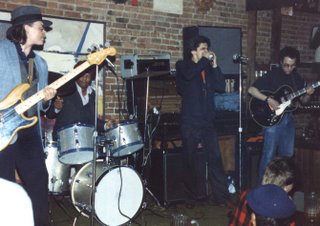
Kim Field & the Left Hand Men at the Pioneer Square Tavern - Seattle, 1983. Left to right: John Lee, Leslie Milton, Kim Field, and Jeff Ziontz.

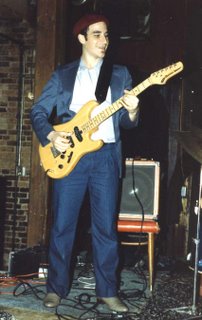
Louis X. Erlanger at the Central Tavern - Seattle, 1983.

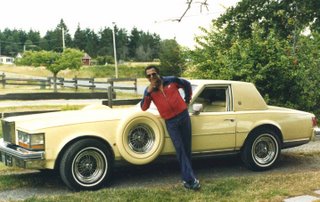
Leslie "Stardrums" Milton and Cadillac. Lopez Island, WA - Mid '80s.

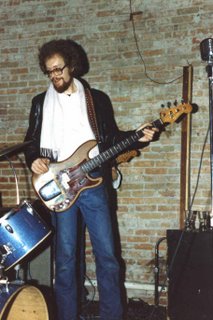
Mark Dalton at the Central Tavern - Seattle, 1983

Sunday, January 22, 2006

What I'm listening to this week.

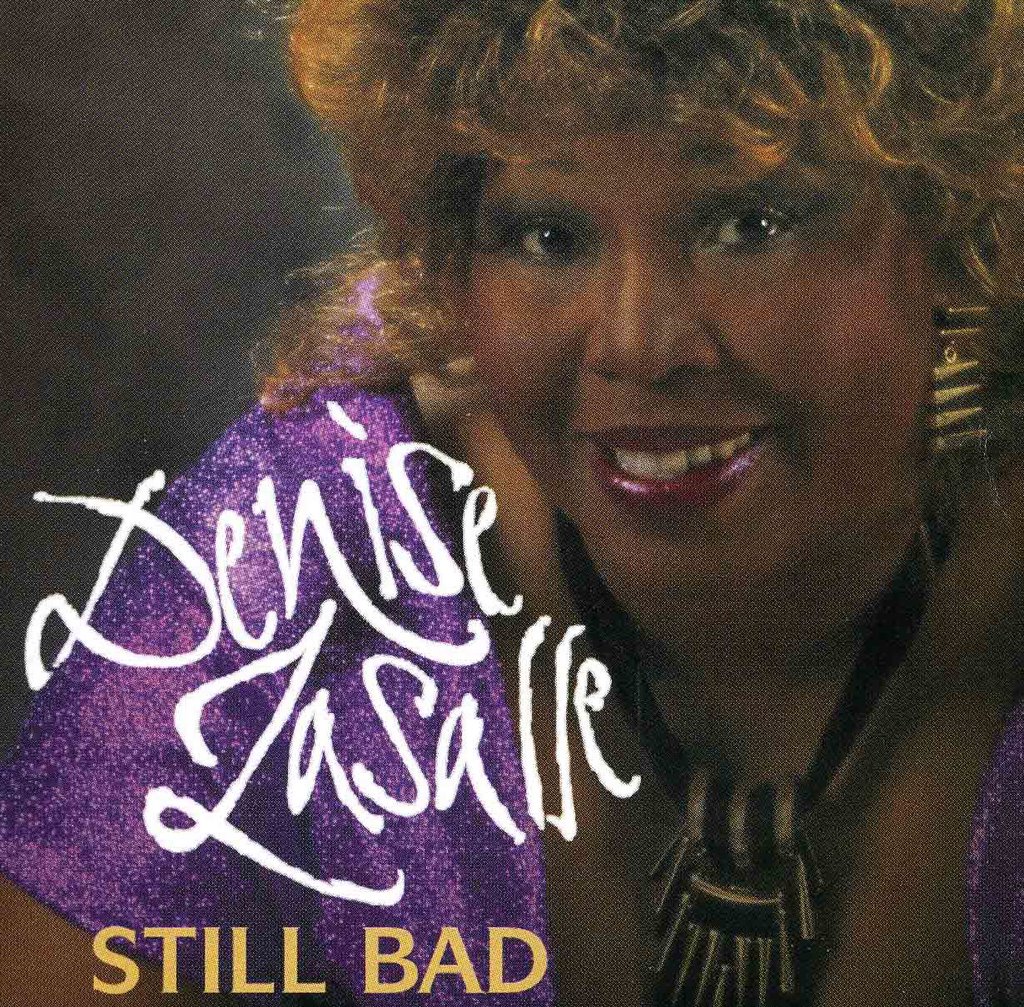
Still Bad
Denise LaSalle
The Malaco Music Group

I haven't listened to this CD for quite a while, but it has been in steady rotation in my car player for a couple of weeks now. The following is a review I wrote about this collection for the Caldonia web page in 1995 - it still accurately reflects my opinion, so here it is again.

This CD is a big hit in my neighborhood right now. I brought it home just in time for our annual Blues & Barbecue party. After a couple of million drinks, we put this CD on the box and had a ball dancing in the living room until the wee wee hours. Now I've got to make tapes of "Still Bad" for everyone...

Nobody does the in your face, nasty, soul/blues woman show better than Denise LaSalle. Born in Leflore County, Mississippi in 1939, Denise is a well respected song writer and singer. She specializes in clever, humorous tunes about the battle of the sexes. In fact, Barbara Mandrell's hit, "Married, But Not To each Other," was written by her.

An R & B singer for most of her career, Denise La Salle has successfully concentrated on the soul/blues genre since signing with Malaco Records in the early 1980's. She is supported on this recording by the crack Malaco studio staff. Many of the cuts utilize a full horn section, backup vocalists, and an actual string section (!). The production is very good; funky and not too slick.

Five of the songs here were written by LaSalle. My favorites are "The Sweeter The Man," a bittersweet ballad about lost love, and "Risky Business," a tune about the dangers of messin' around with sex in the '90s.

There's a whole mess of great tunes here by the Malaco songwriting staff. In "Three People" Denise wonders who her man is thinking about during sex (“Three people in my bed/me, my man, and the woman in his head..."). And by the way, why should men always get it for free, she wonders in "1-900-Get-Some," a great tune about phone sex. The real rocker on this set is "It Ain't Over Until The Fat Lady Sings," a tribute to female orgasms ("It ain't over 'til you make my bell ring/it ain't over 'till the fat lady sings!"). I'll bet Denise tears up the concert crowds with this one!

A terrific set, great production and songwriting, and a sense of humor throughout. Highly recommended.

Thursday, January 12, 2006

What I'm listening to this week.

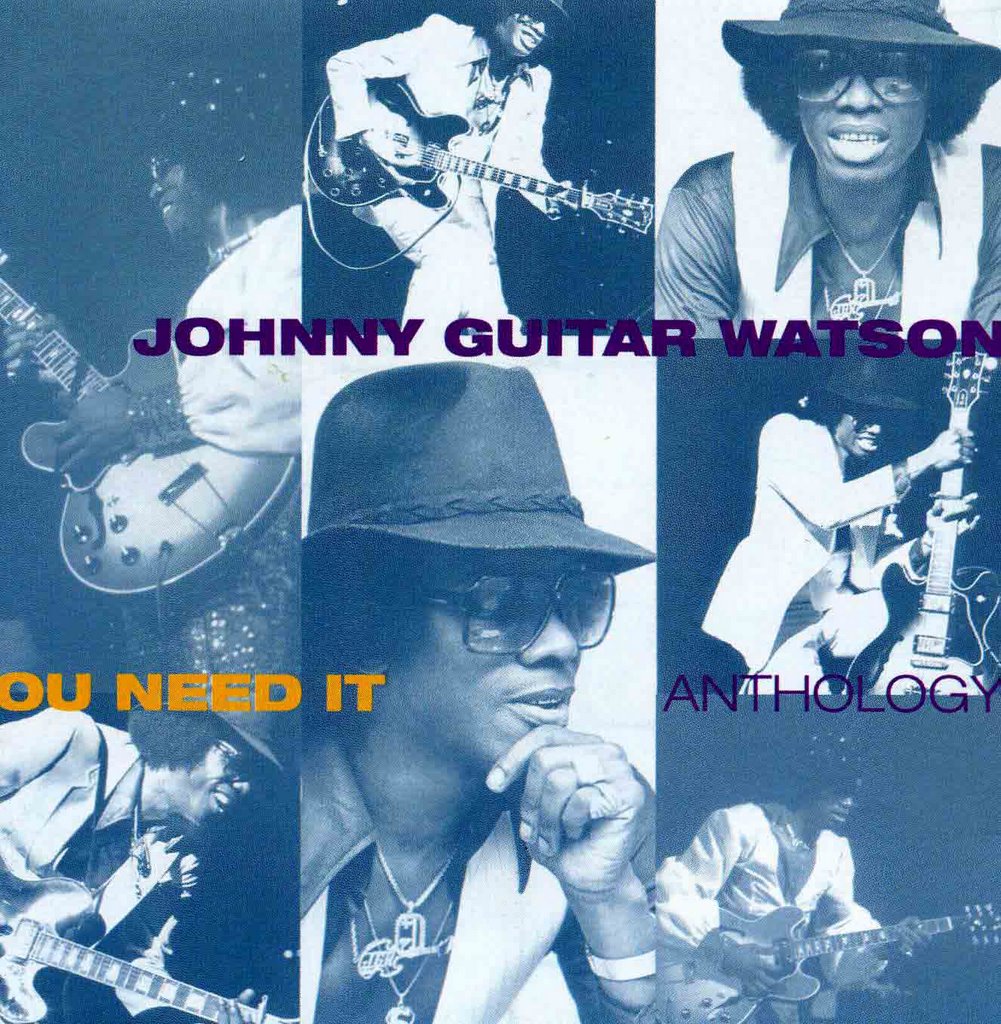
You Need It - Anthology
Johnny Guitar Watson
Sanctuary Records Group

Here's another CD I snagged at Tower Records this last Christmas. I am a BIG Johnny "Guitar" Watson fan. I was actually looking for a compilation of his older stuff that might have "Cuttin' In" on it, a tune I used to sing with my old band Nightlife. I had no luck finding that tune, but found this compilation instead that features Watson's funky sides that were released in the '70s and '80s.

Funny - I was thinking about this later material of Watson's after watching the movie "Roll Bounce" with my kids over the holiday weekend (good show by the way- check out Charlie Murphy, the hilarious neighborhood garbage man). This movie featured many '70s tunes including Watson's "Superman Lover," which I had never heard before, but really enjoyed.

There are lots of great tunes on this inexpensive double CD set. Besides "Superman Lover," the hits "Ain't That A Bitch" and "A Real Mother For Ya" are also included on the first CD. I also enjoyed "It's About The Dollar Bill," "You Can Stay But The Noise Must Go," and "What The Hell Is This?" There is also an oddball version of "Gangster Of Love" that features a straight ahead shuffle beat and eliminates the break-time arrangement of the original tune.

The cool thing about these tunes is this: Watson may have reinvented himself as a funkmeister during this period but his great sense of humor is evident throughout, and his guitar playing, while not as raw as his earlier blues sides, is still smokin'! Hey, we even get some extensive liner notes with this collection for a change, so what's not to like - check it out!

Wednesday, January 04, 2006

What I'm listening to this week.

Live
Donny Hathaway
Atlantic Records

I picked up this old favorite a couple of weeks ago at Tower Records. Inexpensive at $12.00, this CD includes the original vinyl album artwork but is missing the liner notes.

I'll bet it's been 20 years since I've heard these recordings by the great singer/keyboardist/songwriter Donny Hathaway and a terrific band that included guitarist Cornell Dupree and ace bassist Willie Weeks, plus another guitarist, conga and trap drums, and Hathaway on acoustic and Wurlitzer electric piano. The album was recorded before very enthusiastic fans at the Troubadour in Los Angeles and the Bitter End in New York, and was released in 1972.

These recordings are great fun and Hathaway, the band, and the fans are all having a ball! The first tune is a fine version of Marvin Gaye's "What's Goin' On," followed by Hathaway's "The Ghetto" which features smoking piano and percussion solos. The crowd helps out with the vocals on Carole King's "You've Got A Friend" by singing the choruses for the band leader. There's even a cool version of John Lennon's "Jealous Guy" here where the band helps out with some vocal harmonies on the chorus. The final tune, "Voices Inside (Everything Is Everything)," is a 14-minute jam that features the famous 3+ minute-long solo by electric bass maestro Willie Weeks.

This is a terrific record by one of the premier soul artist of the time, and I recommend it highly. Play it loud!

Saturday, November 19, 2005

CD Review by Mark Dalton

Blue Universe
Jeff Simmons
Blue Fox Records

There was a popular cartoon image back in the day (both in New Yorker-type cartoons, and the Warner Brothers kind) that you don’t see much any more, but which strikes me when I think about Jeff Simmons and this fine CD he just released – the image is these guys in white uniforms with giant butterfly nets, chasing after a guy in a hospital gown with a gleeful, manic grin on his face… the guy looks smart, if a little crazy, he is quick on his feet, the uniforms look a little slow and none too bright, and you just know our boy is going to get away, at least for now!

This cartoon image, I believe, plays on a classic American archetype, Br’er Rabbit – that quick-witted hare who is always a couple steps ahead of somebody who is seriously irritated with him, usually with very good reason. “Stop! Stop, I say! You can’t get away with that! Somebody stop that man!”

To get to the point here, the will o‘ the wisp Seattle singer and all-around musician, Jeff Simmons, a man with his heart in the blues no matter what he’s doing, has a hilarious persona as a performer that draws from this same well. Simmons has written a whole cycle of great tunes about “Treatment,” for example – with a couple such tunes residing on this CD. Simmons’ ner-do-well musician character is always one step ahead of those pesky treatment program guys - whether he’s “Breakin’ Out of Treatment,”or kicking back and enjoying the life of a “Treatmon’ Center Playboy” while he’s there, as he does on this CD.

This CD is a result of work-in-progress for the last 20 years or so, going through many sessions and many musicians. I used to play some gigs around town with Simmons in his alter ego as Robert Sumpner (aka Little Bobby) and his band, “The Stump Blasters.” Guaranteed big fun with Little Bobby, let me tell you! One time I showed up at a Simmons recording session, and Guitar Shorty was onboard for the evening, but he didn’t make it on this CD. Blues harpist Dave Prez is here, and has been an onboard contributor for many years, as has sax ace Billy Joe McPherson. Simmon’s pals from Vancouver B.C. are also here, along with a great mixture of original tunes and a handful of carefully chosen, duly Simmonized covers.

There are a couple of different bands at work here – one is a group of Canadian studio guys that play a kind of commercial blues sound that is just a little bit slick and generic for Simmons, in my opinion, but over which he handily triumphs - on the radio-ready “Bucket of Blues” for example, where Simmons’ pounding piano and Shaft-style wah-wah guitar are notable, along with good lyrics. Simmons’ accurate rockabilly reading of the classic “Bertha Lou” boosts this tune above average, too - but it could be bristling with manic energy – a little more dangerous, you know?

Things start to heat up real nice on the jazzy “Vancouver by Night,” with its funky organ holding things together, and the stuff that really knocks me over begins ha-pen-nin’ next with “New In Town.” Remember “The Shining?” This tune sounds like it was recorded in the lounge of the Overlook Hotel – in the dead of winter – the production is just spectral enough, and Simmons’ wonderfully smarmy delivery has those ghostly bootleg jazz babies swooning… “New in Town” is the first one hit over the fence by Jeff and his long time compadre, Billy Joe, whose sax is perfect here.

“Warned You Baby” is another radio-ready cut, this time in a kind of funky Texas shuffle vein that will sound fine midway through your favorite weekend blues show, but it is really a warm up for the next two great tunes in a row, again with our resident Br’er Rabbit and the Overlook Hotel Band (playing those hotel chords, too you bet!) – the impeccable (send out for a) “Bucket of Beer” (and while you are up, “Send out, for a gallon of wine, if the other men drink it, all their women could be mine!”). Then comes the Simmons classic “CD Party” – “with no cassettes!” The title is also an obvious play on Seattle’s Central District, or “the CD”- a neighborhood that used to be for musicians, adventurous souls and the wildest parties in town before the forces of gentrification spoiled that party too.

For my money, these two tunes capture Simmons (left - photo by Phil Chestnut) at his exuberant best. If this was a better world, Jeff would have a house band gig, Thursday through Sunday, in the lounge of someplace old and plush like the Sorrento Hotel, for the rest of his life, playing tunes like these to his heart’s content. And the rest of us could go down there and sit in, and play them too! Wouldn’t that be heaven?

In the home stretch, “Sweet Little Hobby Rocker” is another great cut – rolling piano, great vocals, and cool lyrics about one of those coast-to-coast teenage dream girls that get further and further out of the reach of grizzled old rockers like us – still fun to write songs about though!

This CD ostensibly winds up with an instrumental – pounding Fats Domino piano and stuttering Hammond organ with some wild guitar flowing over the top, a musical hot fudge sundae of sorts with a tasty glissando conclusion… but wait! Don’t touch that stereo! They haven’t got our boy yet…

“Yon’ come the bus, for the L.A. County Home… I’m going back to Canada, where I’m better known! They try to grab you, put you on the treatment farm, I’m going back to Canada, where you can’t do nobody no harm!”

Things keep on like they are ‘round here, I’m gonna be crying “Take me with you Jeff!” ‘fore you know it!" Meanwhile, I can put this excellent collection on the box, and get a smile back on my face! Check it out!

Originally from Nebraska, Mark Dalton moved to Seattle in the early '70s. He is an accomplished bassist and stalwart bluesman. He currently plays with the Chris Stevens Band. Photo by Ronda Lee.

Wednesday, October 26, 2005

CD Review by Mark Dalton

Absolutely
David Brewer and the Intimidators
Crossed Arrows Music

The chorus for one of my favorite tunes on this excellent disc says "You don't know me that well..." and it is true that I don't know David Brewer, the man, that well. We have friends in common however, and I've never heard anything said about Brewer except that he is a good, true friend and a righteous man. What I know better, personally, is David Brewer's music. I remember the first time I ever heard him play very well. It was at one of the Seattle Blues Review shows put on at the old G-Note Tavern out on 85th by promoter Jim Hamilton. I can refresh my memory of this 1977 show, because we got it on tape, including performances by Tom McFarland, Isaac Scott, Kim Field, and a scorching set by David Brewer and his band, Blueseye. He did a tune then called "Texas Strut" that blows me away to this day - all the energy of Freddie King in his Shelter Records prime, with explosive solos that also reflected Brewer's then-recent apprenticeship with Albert Collins - louder than hell, with an edge that cut like a machete. Complex, funky arrangement that turned on a dime. To say I was impressed with Brewer's debut in my musical life that night would be a terrible understatement.

Our paths continued to cross over the years as Brewer settled into the Seattle Blues scene as a major player. I have a tape of a jam in Twist Turner's basement in the north end, just before Twist pushed off for Chicago to seek his fortune, with Brewer, Isaac and Brian Butler all playing guitars together, making a hellacious, wonderful racket - screaming Blues like you rarely hear in a more civilized Seattle of 2005.

I was hanging out on a break at the Salmon Bay Eagles last week when a friend of mine gave me a copy of Brewer's (right, at the Jolly Roger Roadhouse in Seattle in the mid-'80s) new CD and said "here - you have got to have this." Okay...I took it home and put it on, and you know what? This is a really good CD. I mean a really good CD. This is not another local blues band CD - you know what I'm saying - a relatively unadorned, low budget, live in the studio, what-you-hear-is-what-you-get any night out in the clubs type-CD. This is an album of good songs - a mix of covers and original tunes - with creative arrangements, and good engineering and production. Some songs have a very cool wall-of-sound effect - layers of guitars in harmony, a solid horn section that sounds like Phil Spector himself at the board; these are compositions, obviously approached song-by-song with as much time, energy, and creative thinking as necessary given to each one to make the man happy! Listening to this album over and over hearkens back to a time for me when I would anxiously be awaiting a new release from Freddie King, or Albert Collins, or the Allman Brothers Band, and as soon as I had my hands on it, I would just play it non-stop until I'd crawled all the way inside and the cuts were as broken-in and familiar as a good pair of boots.

Brewer's always interesting take on the Blues is strongly in evidence here - listen to what he has done with an old saw like "Walkin' By Myself" - a tune you've heard hundreds of times if you've been around Seattle Blues for any time at all - and yet, with Brewer's able hands and well-worn voice on the job, it sounds fresh and new. Another familiar tune, the old Animal's hit, "Don't Let Me Be Misunderstood," is given new life, in a convincing reading that, like all of Brewer's music, seems to come straight at you, from the heart. One of Chuck Berry's several delightful continental-flavored songs, "You Never Can Tell," gets the full studio treatment here - horns, vocal chorus, big fat sound - and the result works just great in my book.

Van Morrison's "Into the Mystic" was perhaps the choice of a song that surprised me the most - but a couple times through and I was sold completely. The ringing guitar chorus, backed by a horn section that will make your feet vibrate, is just a great sound, and Brewer sings this tune with deep soul. As it says on the cover of this satisfying set, "Not everything that counts can be counted..." Believe it! Get it!

Originally from Nebraska, Mark Dalton moved to Seattle in the early '70s. He is an accomplished bassist and stalwart bluesman. He currently plays with the Chris Stevens Band. Photo by Ronda Lee.

Tuesday, October 11, 2005

CD Review by Mark Dalton

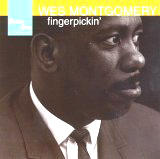
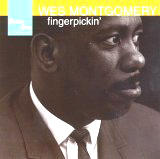
Fingerpickin'
Wes Montgomery
Pacific Jazz/Blue Note CD

I'm sure all you readers out there have noticed that there is a lot of great jazz available these days, at very reasonable prices. Many of these fine sounds are available through CD reissue programs which are restoring to print some of the major jazz catalogs of the '50s and '60s. In fact, these programs are certainly encouraging the resurgence in interest in the classic small combo acoustic jazz of this era. Not long ago, these recordings were strictly on used vinyl and the exclusive province of cluttered jazz record shops, typically manned by aging, but extremely knowledgeable hipsters in the larger cities of the U.S.A. In addition to their great music, these albums were treasured for their cool cover photos (musicians in continental suits, women in sheath dresses, the cigarette smoke drifting languidly...), and their lengthy and informative liner notes. These discs were handled like delicate china, played only on the best of equipment (AR turntable, if you please!) and were passed from hand to hand among a dedicated group of collectors. No longer. I go into the Tower Records store here in Seattle, and I am dazzled by bins and bins full of lovingly remastered, thoroughly documented, and bargain priced reissues of classic Blue Note, Riverside, Prestige, and Pacific Jazz albums of yesteryear, to name just a few labels. I want to talk about one of these reissues here, but there is a longer story to this review.
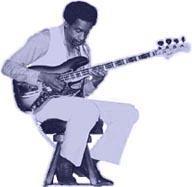
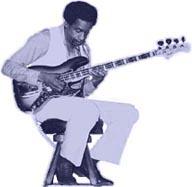
The Montgomery Brothers, Buddy, Monk and Wes, were from Indiana. Buddy played vibes, and wrote a lot of nice tunes. Wes, of course, played electric guitar. He played with his thumb, because he liked the tone it got him. Playing with his thumb led him into playing octaves more frequently than most jazz guitarists (playing a melody line on two strings, simultaneously, an octave apart), which was to become a trademark, and, later in his career as a big money pop-jazz artist, a bit of a burden. Monk (above) played bass. Electric bass. He was the first jazz player to pick up Leo Fender's then-new invention, the Precision Bass, in the early 1950s. And brother, was he roasted for it at the time!

I can recall first reading in Downbeat about Monk's innovative step in the early sixties. One of the elder statesmen of jazz critics was completely mystified as to why an otherwise decent player would want to pick up such a worthless instrument. To lose the warmth of the wood in jazz seemed nothing short of criminal. Charles Mingus was still furious about this incursion some years later when an interviewer made the mistake of asking him about the changing role of the bass in jazz. "I'm not an electrician, man... a real bass player will tell you... once a microphone touches the wood, the wood is no longer wood. It's something beyond human control. Get rid of the steel strings if you want to hear good music, straight music. You must go back to gut."

I can appreciate Mr. Mingus's comments from a musician's perspective. Any player worth a nickel develops a strong love for, and bond with their instrument. You love the way it feels in your hands and you love the sounds you make together. Mr. Mingus spent years becoming an absolute master of the gut-stringed acoustic bass. That instrument, and the sound of that instrument is central to the music he made, and it defines the concept of "bass" for him.

But there have been other bass instruments used in jazz. If you go way back to the beginnings of jazz in New Orleans, the tuba was the bass instrument of choice, and to my ears, New Orleans jazz doesn't sound right without a tuba. There was musical progress made when jazz bands switched to the string bass, but something was lost as well.

Those kicking bass pedals in organ jazz are another example. When some players like Jimmy McGriff started adding electric bass to their tunes in the late '60s, to catch onto the funk thing happening then, the results were less than satisfying to many of us. Part of the attraction of the Hammond B3, and the jazz that has developed from it, is that deep surging pulse of bass from those pedals as an integral part of the sound. Without kicking pedals, the organ often seems to become just another instrument in the band.

The fact remains, however, that Mr. Fender's invention was not not well received in jazz circles. In a 1977 interview published in Tom Mulhern's excellent book: "Bass Heroes," Montgomery states that when he picked it up, "the electric bass was considered a bastard instrument - conventional players despised it." So why did he he start playing it? Because Lionel Hampton told him to, according to Montgomery. It was 1951 and he had just been hired for a tour (which stretched into a two-year steady gig) with the Hampton band, hired on as an upright player, when Mr. Hampton approached him one night, handed him a Fender Bass (one of the first made - 1951 was the year they went into production), and said "play this - it has the sound I want."
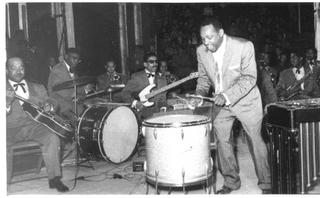

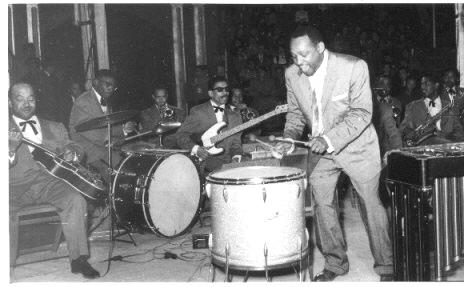
Monk Montgomery (on bass) with the Lionel Hampton Orchestra - 1955

Anyone who has heard recordings of the Hampton band around this time (I have a live album, recorded in Paris) knows they were one a hell of a loud, rocking organization, often edging closer to the rhythm and blues bands of the period than the sophisticated swing of the Goodman band. Montgomery's initial misgivings about the Fender Bass evaporated over time, as he realized he could hold the bottom for this band, be heard clearly and with an even volume from top to bottom of the fretboard, no matter how raucous the action got around him. Aside from a brief flirtation with with the standup during a gig with Cal Tjader in the mid-'60s ("it just wasn't the same.."), Montgomery never looked back.

To bring us back to the review then; after 30-some years of reading fleeting references to Monk Montgomery, variously describing him as a pioneer of the electric bass, and as a desecrator of jazz, I finally got a chance to hear the man play, for myself, with the CD release of some of Wes Montgomery's first sessions in an album called "Fingerpickin" on the Pacific Jazz/Blue Note label. The ten cuts on this album are culled from sessions recorded in Indianapolis on December 30, 1957, and at the Forum Theater in Los Angeles on April 22, 1958. There are lengthy liner notes with this set, copied from a 1975 double vinyl release, with additions for the CD. It may be worth noting that the only comment about Monk Montgomery's playing in these liner notes, new or old, is that he "confines himself to time keeping," and a general observation that this is "a good bebop rhythm section." Perhaps the authors thought they were being kind in not bringing up the bottom-end instrumentation!

So, how is it, you ask? It's a good album. The music ranges from the solid "hard bop" of the period - Energetic and feisty (the rollicking opening cut, "Sound Carrier" for example), to a tasty quartet arrangement of Hammerstein and Kern's classic ballad "All The Things You Are." Wes Montgomery is a blast on guitar - his thumb-style playing does give him an unusual tone and a slightly dirty edge to the sound when he really bears down. His playing is inventive, fresh, and distinctive right out of the gate. The famous octaves are present as embellishments, and they work well.

Brother Buddy is all over this collection on the vibes as well writing several of the tunes. Indeed, if I were to pick a session leader just on the evidence of music in these tracks, Buddy would be the obvious choice. Other players (including a seventeen year-old Freddie Hubbard making his recording debut) are fine, and the album hustles along in a well balanced set that any jazz lover will enjoy.

As for Brother Monk - steady as he goes! What you have here is mainstream jazz bass, walking all over the place, sliding notes, blasting along the fretboard highway on Charlie Parker's "Billies Bounce," stepping up front for a "Fever"-type introductory riff on "Bock To Bock"- All with the sound, the tone of the Fender Bass... Nice fat, well defined notes. No drop-off notes due to the peculiarities of a vibrating sound board. If "confining himself to keeping time" means Monk isn't dancing up to the front of the stage for a roaring electric solo ala Jaco Pastorious (that came later!), it's okay with me. If it means he isn't climbing on a battered "doghouse" upright to slap, thump and ride it across the stage as some of our crowd-pleasing rockabilly brethren are wont to do, that's okay too. When I listen to this music, I can see Monk Montgomery up there on stage, with his Fender Bass well-polished, a dark continental suit and a skinny tie, button down collar and wing-tipped shoes. Seven and Seven for sipping between tunes. Looking and sounding sharp.

A modest revolutionary, perhaps. Cool, you know? But a revolutionary all the same. Committed to the sound and feel of the instrument he fell in love with, just like Charles Mingus. My hat is off to you, Monk, wherever you are!
Originally from Nebraska, Mark Dalton moved to Seattle in the early '70s. He is an accomplished bassist and stalwart bluesman. He currently plays with the Chris Stevens Band. Photo by Ronda Lee.

Lionel Hampton photo from the Lionel Hampton Story web page.